
How Do Doctors Test For Autism?
Testing for autism involves two distinct phases: screening, which identifies children who may need a closer look, and diagnostic evaluation, which confirms or rules out an ASD diagnosis. The American Academy of Pediatrics (AAP) recommends universal screening for all children at 18 and 24 months, plus additional screening whenever a parent raises a concern. A failed screening does not mean your child has autism. It means the next step, a full evaluation, is warranted.
Early identification matters. Research from the NIH shows that children who begin intervention before age 3 show significantly better outcomes in communication, adaptive behavior, and social skills than those who start later. The goal of testing is to get your child connected with support as quickly as possible.
What Is the Difference Between Autism Screening and a Diagnostic Evaluation?
Screening and diagnosis are different steps with different purposes:
- Screening is a brief, standardized process that flags children who may have autism. It does not diagnose. It identifies who needs a more thorough look.
- Diagnostic evaluation is comprehensive. It involves multiple assessments administered by trained specialists and results in a formal diagnosis or ruling out of ASD.
Screening typically happens at well-child visits with your pediatrician. Diagnostic evaluation requires a referral to a specialist team, which may include a developmental pediatrician, clinical psychologist, speech-language pathologist, and occupational therapist.
What Are the Main Autism Screening Tools?
Several validated screening tools are used in pediatric settings. The most widely used include:
M-CHAT-R (Modified Checklist for Autism in Toddlers, Revised)
The M-CHAT-R is a 20-item parent questionnaire designed for children 16 to 30 months. It takes about 5 minutes to complete and asks about behaviors like pointing, pretend play, following a gaze, and responding to their name. Children who score above the cutoff are referred for a follow-up interview. According to the AAP, the M-CHAT-R combined with the follow-up interview has a positive predictive value above 40%, meaning more than 4 in 10 children who screen positive will receive an ASD diagnosis.
STAT (Screening Tool for Autism in Toddlers and Young Children)
The STAT is an interactive, play-based screening tool administered by a clinician rather than a parent report. It is designed for children 24 to 35 months and involves 12 activities that assess social communication, imitation, and play. It takes about 20 minutes and is considered more sensitive than questionnaire-only tools for very young children.
SCQ (Social Communication Questionnaire)
The SCQ is a 40-item parent-report measure used for children 4 years and older. It is quick, inexpensive, and useful as a community screening tool. It is derived from the ADI-R, one of the gold-standard diagnostic instruments.
What Happens During a Full Diagnostic Evaluation?

A comprehensive diagnostic evaluation typically includes several components:
- A detailed developmental and medical history interview with the parents
- Direct observation and structured interaction with the child
- Standardized assessments of communication, social interaction, cognitive ability, and adaptive behavior
- Review of records from school, previous evaluations, or other providers
The process is typically done by a team. The CDC estimates that the average age of first ASD diagnosis in the U.S. is around 4 to 5 years, though diagnosis can occur as early as 18 months for some children. The wait for a comprehensive evaluation can range from a few weeks to more than a year depending on your location and provider availability.
What Are the Gold-Standard Diagnostic Tools?
ADOS-2 (Autism Diagnostic Observation Schedule, Second Edition)
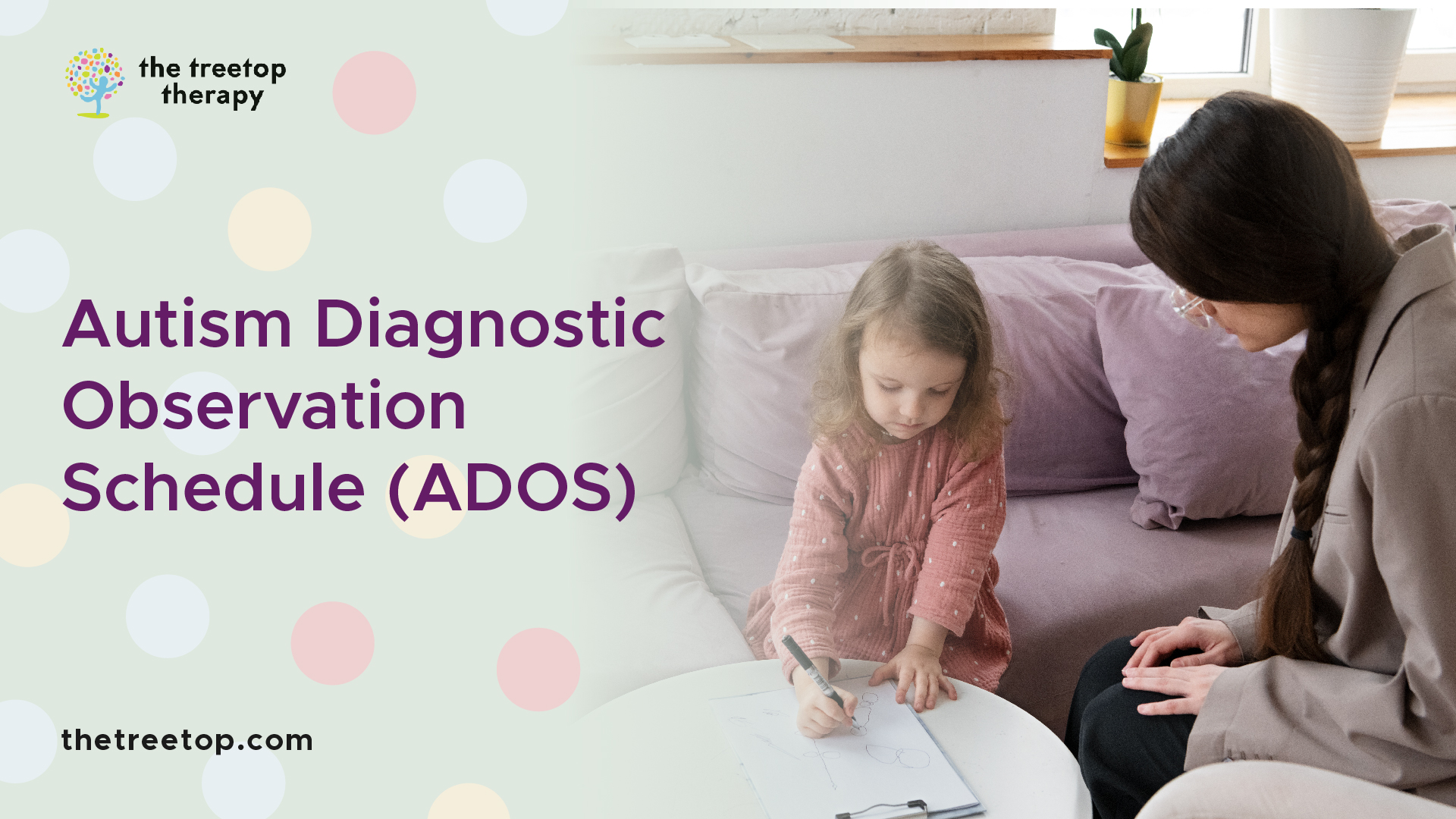
The ADOS-2 is the gold standard for autism diagnosis. It is a structured, play-based observational assessment administered by a trained clinician across five modules, each designed for different developmental and language levels. The clinician observes the child’s spontaneous communication, social reciprocity, imaginative play, and restricted or repetitive behaviors across a set of standardized activities. The ADOS-2 takes 40 to 60 minutes to administer and requires specialized training.
ADI-R (Autism Diagnostic Interview, Revised)
The ADI-R is a semi-structured interview conducted with the child’s parent or caregiver, typically lasting 90 minutes to 2.5 hours. It covers three core domains: social interaction, communication, and restricted repetitive behaviors. The ADI-R provides a detailed developmental history from the child’s earliest years and is particularly useful for distinguishing autism from other developmental conditions. Used together, the ADOS-2 and ADI-R form the most comprehensive diagnostic combination available.
CARS-2 (Childhood Autism Rating Scale, Second Edition)
The CARS-2 is completed by the evaluating clinician based on observation and available history. It rates the child across 15 areas of behavior, including social-emotional understanding, body use, and adaptation to change. It is commonly used as part of a broader evaluation battery.
Who Can Diagnose Autism?
Autism can be diagnosed by several types of licensed professionals:
- Developmental pediatricians: Pediatricians with additional training in developmental and behavioral conditions. Often the most accessible specialist for young children.
- Child psychiatrists: Medical doctors who specialize in mental health and neurodevelopmental conditions. Can also evaluate for co-occurring conditions like ADHD or anxiety.
- Clinical psychologists with expertise in autism: Conduct comprehensive neuropsychological evaluations and administer gold-standard instruments like the ADOS-2.
- Pediatric neurologists: Typically involved when there are questions about neurological conditions such as epilepsy or Rett syndrome alongside autism features.
- Speech-language pathologists: Often part of the evaluation team, particularly for assessing communication skills, but rarely diagnose independently.
In many areas, the fastest path to evaluation is through a university-based autism center or a multidisciplinary developmental clinic, rather than waiting for a single specialist appointment.
What Should You Bring to an Autism Evaluation?
Being organized before the evaluation helps it go more smoothly and ensures the clinicians have the full picture:
- Any previous evaluations, including speech, occupational therapy, or school assessments
- School records and teacher reports describing your child’s functioning in a group setting
- A written summary of your concerns, with specific examples and the ages when you first noticed them
- Baby photos or home videos, especially ones that show your child around 12 to 18 months
- Medical records, including any genetic testing results
- A list of current medications and any supplements
Bringing video of your child at home is especially useful, since a child’s behavior in an unfamiliar clinical setting may differ from their typical patterns.
How Long Does an Autism Evaluation Take?
A full diagnostic evaluation usually takes between 3 and 8 hours of assessment time, often spread across multiple appointments. Getting the appointment itself is frequently the longest part of the process. In many parts of the country, wait times for a diagnostic evaluation are 6 to 18 months. Some families travel to academic medical centers or private neuropsychologists to access faster evaluations.
If you are concerned about your child’s development, do not wait for warning signs to multiply. Contact Treetop or ask your pediatrician for a referral now. Early concerns that turn out to be nothing cost little. Delayed diagnosis and delayed intervention carry real costs.
Does Insurance Cover Autism Evaluations?
In most states, health insurance is required to cover autism diagnostic evaluations. The Affordable Care Act includes autism screening for children as a preventive service, and most state insurance mandates for autism also include diagnostic evaluation coverage. However, coverage details vary by plan and state.
If your insurer denies coverage, you can appeal. Your pediatrician can provide supporting documentation. State insurance commissioners also handle complaints about improper denials. Learn more about autism therapy costs and insurance on our resources page.
What Happens After a Diagnosis?
A diagnosis is the beginning of the support process, not the end. After confirmation of ASD:
- Work with the evaluating team to understand your child’s specific profile of strengths and needs
- Get a referral for ABA therapy if your child is school-age or younger
- Contact your local school district to begin the IEP process if your child is 3 or older
- Connect with a parent support group and autism community resources in your area
At Treetop ABA Therapy, we help families move from diagnosis to services as quickly as possible. We serve families across multiple states, accept most insurance plans, and typically begin services within 2 to 4 weeks of intake. Contact us to get started.
Frequently Asked Questions
What should I expect during the evaluation?
Expect a combination of parent interviews, direct assessment with your child, and standardized testing. The evaluator will observe your child’s communication, social interaction, and behavior patterns across structured and unstructured activities. The full process often spans multiple sessions.
Can my child’s primary care physician diagnose autism?
Some primary care physicians with extra training in developmental pediatrics can diagnose autism, but most will refer to a specialist. A formal diagnosis using the ADOS-2 and ADI-R requires specialized training that most general pediatricians do not have.
What if my child is diagnosed with ASD?
Work with the evaluation team to understand your child’s support needs and get referrals for ABA therapy, speech therapy, and any other services indicated. Contact your school district for an IEP evaluation if your child is 3 or older. Early, intensive intervention produces the best long-term outcomes.
Can autism tests be wrong?
No test is perfect. False positives (diagnosis when no ASD is present) and false negatives (missing a diagnosis that is there) can occur. If you have concerns about results, seek a second opinion from a different specialist or evaluation team.
What is the M-CHAT-R?
The Modified Checklist for Autism in Toddlers, Revised, is a parent-completed screening questionnaire for children 16 to 30 months. It is not a diagnostic tool but helps identify children who should receive a full evaluation. It is administered at routine well-child visits.
How early can autism be diagnosed?
Research suggests that experienced clinicians can make a reliable diagnosis as early as 18 months in some children. In practice, most children are diagnosed between ages 3 and 5. Earlier diagnosis enables earlier intervention, which the NIH associates with significantly better outcomes.
Where can I find autism testing near me?
Start with your pediatrician for a referral. University-based autism centers, children’s hospitals, and developmental pediatric clinics are typically the most comprehensive options. In some of our service states, Treetop can assist with guidance on connecting with evaluation resources. Reach out here.
Get Support for Your Child
Treetop provides evidence-based ABA therapy that helps children with autism build skills and confidence. Most families start within 2 weeks.
Contact Us or call (855) 800-9361