
50 Best Activities for Children With Autism (Organized by Skill Area)
February 11, 2026
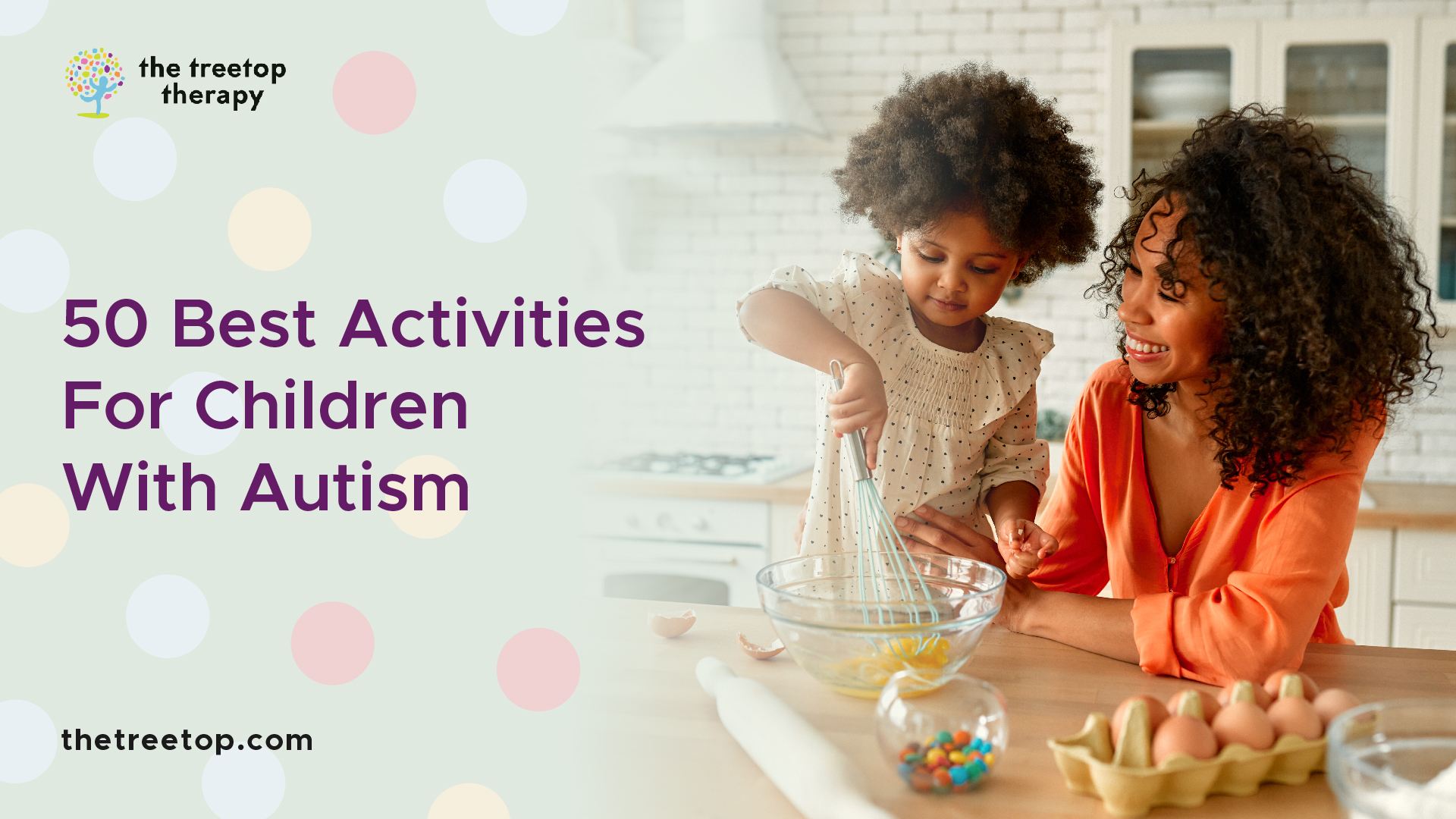
Woman and child mixing ingredients in kitchen; text:

You already know your child loves certain things — spinning, splashing, lining up toys, rewatching the same video. But turning those natural interests into structured activities that also build skills? That's where most parents get stuck.

The good news: research consistently shows that physical activities, creative engagement, and structured play improve motor skills, social behavior, and cognitive function in children with autism. A 2025 systematic review in Frontiers in Psychiatry found that chronic exercise interventions positively impact motor performance, cognitive function, social relationships, and behavioral challenges in children and adolescents with autism. The activities below are organized by the skills they build, so you can match them to what your child actually needs — not just what looks fun on Pinterest.

TLDR: What Parents Need to Know

This list includes 50 activities grouped by the skills they target: sensory regulation, fine motor development, gross motor skills, social interaction, communication, creative expression, cognitive development, daily living skills, nature-based exploration, and physical fitness. Many activities overlap categories. The best activity for your child is one they'll actually do — start with their interests and build from there. If an activity causes consistent distress rather than productive challenge, it's the wrong fit right now, not a failure.

Three Things Most Activity Lists Get Wrong

"High-Functioning" and "Low-Functioning" Labels Don't Help You Choose Activities

Many activity lists divide suggestions by "high-functioning" and "low-functioning" categories. These terms aren't used in clinical practice anymore for good reason — they oversimplify your child's profile. A child who speaks fluently may still struggle with motor planning. A child who is nonverbal may have strong fine motor skills and love detailed crafts. Instead of matching activities to a label, match them to your child's specific sensory preferences, motor abilities, and interests.

Activities Don't Need to Be "Therapeutic" to Be Valuable

Not every moment needs to be a therapy session. Play for the sake of enjoyment builds connection, reduces stress, and gives your child a sense of competence. If your child loves jumping on a trampoline, that's already building vestibular processing and gross motor coordination — you don't need to turn it into a structured drill.

Sensory Preferences Should Drive Activity Selection

A child who is sensory-seeking (craves deep pressure, movement, or intense input) will thrive in very different activities than a child who is sensory-avoidant (overwhelmed by noise, textures, or crowds). Knowing your child's sensory profile — ideally through an occupational therapy evaluation — is the single most useful step you can take before choosing activities.

Sensory Regulation Activities (1–7)

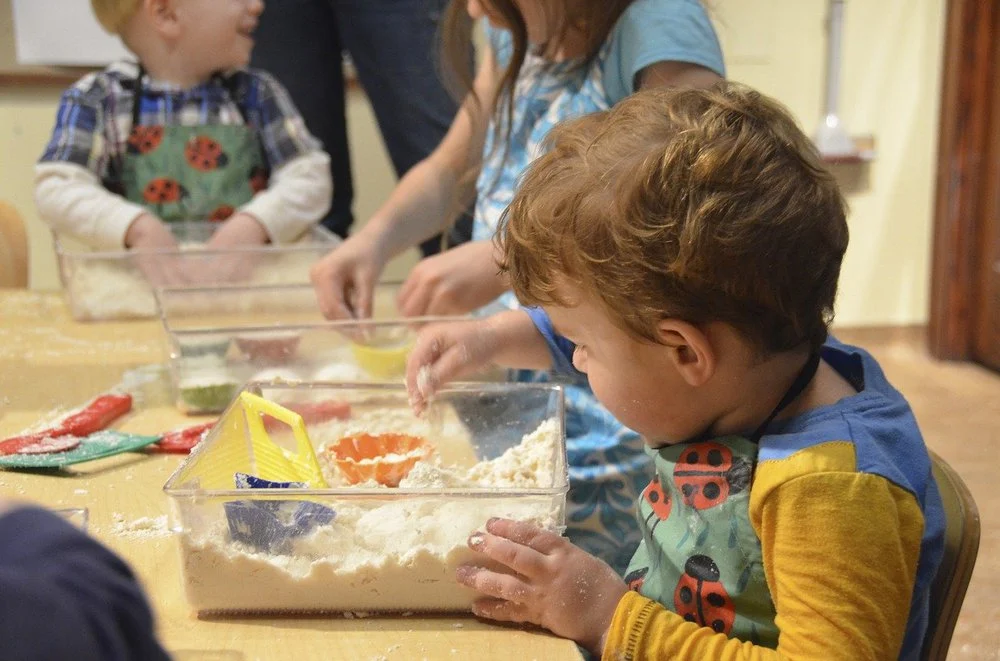
1. Sensory bins. Fill a container with rice, dried beans, water beads, kinetic sand, or shaving cream. Add scoops, cups, and small figurines. Sensory bins let children explore textures at their own pace, which supports tactile processing and sustained attention. Start with textures your child already tolerates and gradually introduce new ones.

2. Water play. Beyond the bath — think sprinklers, water tables, pouring stations, or simply washing dishes together. The hydrostatic pressure of water provides natural deep-pressure input that many children find calming. Research from the Autism Research Institute notes that autistic children are often naturally drawn to water, and the sensory properties of water (buoyancy, resistance, pressure) can help with focus and self-regulation.

3. Playdough and clay sculpting. Squeezing, rolling, and shaping dough builds hand strength while providing proprioceptive input. Make it at home with flour, salt, water, and food coloring for a cooking-plus-sensory combo activity.

4. Weighted blanket or lap pad time. Not technically an "activity," but pairing a weighted blanket with a quiet activity like reading or puzzles can help a sensory-seeking child settle and attend. The deep pressure mimics the calming effect of a firm hug.

5. Swinging. Vestibular input from swinging helps with balance, spatial awareness, and self-regulation. Platform swings and pod swings are popular choices for children who need full-body enclosure. Let your child control the speed and duration — forced swinging can cause distress rather than regulation.

6. Bubble play. Blowing bubbles builds oral motor strength (helpful for speech), tracking bubbles builds visual motor coordination, and popping them builds hand-eye coordination. The slow, predictable movement of bubbles is also visually calming for many children.

7. Fidget tool stations. Create a designated basket of fidget spinners, stress balls, textured rings, and chewable jewelry. Having a go-to regulation toolkit teaches your child to self-select calming strategies — a skill that transfers to school and public settings.

Fine Motor Activities (8–14)

8. LEGO or block building. Manipulating small pieces strengthens finger muscles and builds spatial reasoning. Start with larger Duplo blocks for younger children or those with less developed fine motor skills, and progress to standard LEGO as grip strength improves. Following visual instructions also practices sequencing.

9. Bead stringing. Threading beads onto string or pipe cleaners builds bilateral coordination (using both hands together), pincer grasp, and pattern recognition. Use large wooden beads first, then progress to smaller pony beads.

10. Cutting and pasting. Scissor use develops hand strength, bilateral coordination, and visual motor integration. Start with snipping strips of paper, then progress to cutting along lines and eventually cutting out shapes. Adapted scissors with spring-loaded handles can help children who struggle with opening the blades.

11. Painting with different tools. Brushes, sponges, cotton swabs, forks, and fingers all require different grip patterns. Painting on an easel or taped paper on a wall encourages shoulder stability and wrist extension — important precursors to handwriting.

12. Sticker activities. Peeling stickers off a sheet and placing them on a target builds pincer grasp and hand-eye coordination. Create simple sticker scenes or use dot-to-dot sticker sheets to add a cognitive component.

13. Puzzles. Jigsaw puzzles require visual scanning, shape recognition, spatial reasoning, and fine motor precision. Start with knob puzzles or chunky wooden puzzles, then progress to interlocking pieces. Puzzles are also excellent for building frustration tolerance and problem-solving persistence.

14. Cooking and baking. Stirring, pouring, kneading, cracking eggs, and decorating cookies all target fine motor skills while also building sequencing, measurement concepts, and sensory tolerance. The built-in reward of eating what you've made is powerful motivation.

Gross Motor and Physical Activities (15–22)

15. Swimming. Research consistently supports swimming as one of the most beneficial physical activities for children with autism. A 2024 systematic review found that aquatic interventions guided by professionals improved both motor and social skills and significantly decreased autistic behaviors. Beyond therapy, swimming is a critical safety skill — according to data cited by the Autism Research Institute, autistic children are 160 times more likely to die from drowning compared to the general pediatric population. The buoyancy of water also supports children with low muscle tone and makes movement easier than on land.

16. Trampoline jumping. Trampolines provide intense vestibular and proprioceptive input, which makes them ideal for sensory-seeking children. Mini trampolines with handles are a good starting point for younger children. Jumping also builds bilateral coordination, core strength, and endurance.

17. Obstacle courses. Set up a simple indoor or outdoor course using pillows, tunnels, balance beams, and stepping stones. Obstacle courses combine motor planning, sequencing, and physical challenge. You can adjust difficulty constantly — add a crawling section for proprioceptive input, a balance beam for vestibular challenge, or a throwing station for hand-eye coordination.

18. Yoga. A 2024 study published in Behavioral Sciences found that yoga interventions improved motor and imitation skills in children with autism. Yoga builds body awareness, flexibility, core strength, and self-regulation. Animal-themed poses (downward dog, cobra, butterfly) appeal to children who connect with concrete imagery. Many children benefit from visual pose cards rather than verbal-only instructions.

19. Martial arts. Structured martial arts classes teach body control, following multi-step directions, and social norms like bowing and taking turns. A systematic review noted that martial arts have been singled out as particularly beneficial for children with autism, with positive effects on social skills and behavior reduction. Many dojos offer adaptive classes or small-group options.

20. Dance and movement. Free dance to music allows proprioceptive and vestibular input without rules. Structured dance classes add the social component of mirroring, turn-taking, and group synchronization. For children who are uncomfortable with touch, dance offers a way to participate in group physical activity without physical contact.

21. Bike riding. Learning to ride a bike builds bilateral coordination, balance, core strength, and the ability to cross midline. Balance bikes (no pedals) are an excellent first step. Bike riding also opens up community participation — riding with family, joining bike groups, or simply getting around the neighborhood independently.

22. Climbing. Indoor climbing walls, playground structures, and even tree climbing build upper body strength, motor planning, and problem-solving. Climbing also provides intense proprioceptive input. Bouldering-style climbing (low to the ground, no ropes) is a good option for children who may be anxious about heights.

Social Interaction Activities (23–30)

23. Board games and card games. Turn-taking, winning and losing gracefully, following rules, and reading social cues from other players — board games teach all of these in a structured, predictable format. Start with simple games like Candy Land or Uno, then progress to games that require more strategy and social negotiation.

24. Cooperative games. Games where everyone works together toward a shared goal (like Hoot Owl Hoot or The Sneaky, Snacky Squirrel Game) remove the pressure of competition while still practicing teamwork and communication.

25. Parallel play activities. Not all social engagement requires face-to-face interaction. Sitting side by side drawing, building, or playing with individual LEGO sets builds comfort with proximity and shared space — a stepping stone to more interactive play.

26. Structured playdates. Rather than open-ended "go play," plan a specific activity with a clear beginning and end for playdates. Baking cookies together, building a specific LEGO set, or completing a scavenger hunt gives your child a script to follow, reducing the social demands of unstructured interaction.

27. Pet care and animal interaction. Feeding, grooming, and walking a pet teaches responsibility, empathy, and nonverbal communication. Research on animal-assisted interventions suggests positive effects on social skills and emotional regulation. For families not ready for a pet, regular visits to a therapy animal program or even a local pet store can provide similar opportunities.

28. Group sports with clear rules. Bowling, track and field, and swimming laps have straightforward, predictable structures that reduce social ambiguity. Many communities offer Special Olympics programs, adaptive sports leagues, or buddy programs that pair children with peer mentors.

29. Drama and role-play. Acting out scenarios — ordering at a restaurant, going to the doctor, meeting someone new — gives your child a safe space to practice social scripts before encountering them in real life. Use puppets or figurines for children who are uncomfortable with direct role-play.

30. Video game co-op play. Multiplayer video games that require cooperation (rather than competition) can be a comfortable entry point for social interaction, especially for children who struggle with face-to-face communication. Games like Minecraft creative mode or collaborative puzzle games encourage teamwork without eye contact pressure.

Communication Activities (31–36)

31. Music and singing. A 2024 meta-analysis of 13 randomized controlled trials (1,160 participants) found that music therapy produced a significant improvement in behavioral symptoms in children with autism. Singing familiar songs, playing instruments, and musical call-and-response activities build rhythm, vocalization, and turn-taking without the pressure of conversational language. Many nonverbal children who struggle with speech can sing or hum melodies.

32. Reading together. Shared reading builds vocabulary, comprehension, and joint attention. Use books with repetitive phrases to encourage your child to fill in words. Picture books with minimal text allow children to narrate the story themselves, building expressive language in a low-pressure way.

33. Visual schedule making. Involve your child in creating their own visual schedule using photos, drawings, or icons. This builds both communication skills (labeling, sequencing, expressing preferences) and daily living skills (routine awareness, time management).

34. Storytelling with props. Use figurines, felt boards, or picture cards to tell and retell stories. This builds narrative skills (beginning, middle, end), vocabulary, and creativity. Let your child take the lead — their stories don't need to make conventional sense to build language skills.

35. Emotion charades. Act out or identify emotions using faces, body language, and scenarios. This builds emotional vocabulary and recognition of nonverbal cues. Use a mirror so your child can see their own facial expressions. Photo cards of real emotional expressions are more effective than cartoon faces for building real-world recognition.

36. Social stories creation. Social stories, originally developed by Carol Gray, use simple text and images to describe social situations and expected responses. Creating social stories together about upcoming events (a birthday party, a haircut, a trip to the grocery store) gives your child a preview of what to expect and a script for how to respond.

Creative Expression Activities (37–42)

37. Drawing and illustration. Drawing provides a nonverbal outlet for self-expression and builds fine motor skills. Many autistic children are highly visual thinkers — Temple Grandin famously described thinking in pictures rather than words. Provide a variety of media (crayons, markers, colored pencils, chalk) to encourage exploration.

38. Photography. Give your child a camera (even an old phone) and let them photograph things that interest them. Photography builds observation skills, perspective-taking (framing a shot), and provides a concrete product to share and discuss with others — a natural conversation starter.

39. Collage making. Tearing and gluing magazine images, fabric scraps, and found objects builds fine motor skills and creative decision-making without requiring drawing ability. Collage is forgiving — there's no "wrong" way to do it, which reduces performance anxiety.

40. Music instrument exploration. Drums, xylophones, keyboards, and rain sticks all provide different sensory experiences and sound-cause relationships. Percussion instruments are especially accessible because they require no prior knowledge. Group drumming circles build rhythm, turn-taking, and social synchronization.

41. Stop-motion animation. Using a phone or tablet and small figures, your child can create simple stop-motion videos. This combines fine motor control, sequencing, storytelling, and technology skills. Many autistic children who are passionate about a specific interest (dinosaurs, trains, characters) will spend extended focused time creating animations about their interest.

42. Building models. Model kits (cars, planes, architectural sets) build fine motor skills, patience, and the ability to follow multi-step visual instructions. The concrete, step-by-step nature of model building appeals to children who prefer structured, predictable tasks over open-ended creative projects.

Nature and Exploration Activities (43–47)

43. Gardening. Digging, planting, watering, and harvesting engage multiple senses and teach cause-and-effect relationships over time. A 2023 meta-analysis in JAMA Network Open assessed nature-based interventions for autistic children and found evidence supporting positive effects on health-related functional outcomes. Container gardening is a manageable starting point that works even in apartments.

44. Nature walks and hiking. Walking in nature provides sensory variety (textures, sounds, sights) without the overwhelming stimulation of crowded indoor environments. Bring a magnifying glass, a collection bag for interesting rocks or leaves, or a nature identification guide to add structure. Trails with predictable loops are less anxiety-provoking than unfamiliar terrain.

45. Bird watching. Bird watching builds patience, attention to detail, and categorization skills. Many autistic children who are drawn to cataloging and classification find bird identification deeply engaging. Use a simple field guide or birding app to add a reference component.

46. Stargazing. The predictability of constellations, the quiet of nighttime, and the visual interest of the sky make stargazing appealing to many autistic children. Use a constellation map or app. This activity also provides a natural opportunity for calm, side-by-side interaction (no eye contact pressure) and can become a special interest with deep learning potential.

47. Horseback riding. Therapeutic horseback riding has one of the strongest evidence bases of any alternative intervention for autism. A landmark randomized controlled trial by Gabriels et al. (2015), published in the Journal of the American Academy of Child and Adolescent Psychiatry , studied 127 children aged 6–16 over 10 weeks. Children in the riding group showed significant improvements in irritability, hyperactivity, social cognition, social communication, and verbal fluency compared to a control group. The rhythmic movement of the horse also provides vestibular and proprioceptive input similar to swinging. Look for a PATH International-accredited facility near you.

Daily Living and Independence Activities (48–50)

48. Cooking simple meals. Beyond the fine motor benefits, cooking builds sequencing, safety awareness, measurement concepts, and independence. Start with no-cook recipes (trail mix, sandwiches, fruit salad), then progress to microwave and eventually stovetop with supervision. Visual recipe cards with photos for each step can replace written instructions.

49. Sorting and organizing. Laundry sorting by color, organizing a bookshelf by size, or sorting toys into labeled bins — these activities build categorization skills, executive function, and contribute to household routines. Many autistic children find sorting inherently satisfying, making this a natural fit.

50. Personal care routines. Turning hygiene routines into "activities" with visual schedules, timers, and choice-making (which toothbrush color? which soap scent?) builds independence while respecting your child's need for predictability. Task analysis — breaking a routine into its smallest steps — is the same approach used in ABA therapy, and you can apply it at home to handwashing, tooth brushing, or getting dressed.

How to Choose the Right Activities for Your Child

With 50 options, the temptation is to try everything. Here's a more strategic approach.

Start With What They Already Love

If your child already gravitates toward water, start with swimming or water play. If they line up objects, try bead stringing or building models. Working with existing interests rather than against them increases engagement and reduces resistance.

Use Sensory Profile as a Filter

Ask your child's occupational therapist about their sensory profile, or observe patterns yourself. Sensory seekers generally do well with intense physical activities (trampolines, swimming, climbing). Sensory avoiders may prefer quieter activities with controlled input (puzzles, drawing, reading). Children with mixed profiles may need different activities at different times of day.

Rotate Activities to Prevent Burnout

Even preferred activities can become stale. Maintain a rotation of three to five activities across different skill areas, and introduce one new activity at a time while keeping familiar ones available as anchors.

Don't Overlook the Social Component

Any activity can become social with the right setup. Drawing alone builds fine motor skills. Drawing next to a sibling builds parallel play tolerance. Drawing together on a shared mural builds cooperation. You can scale the social demand of almost any activity up or down based on your child's readiness.

When Activities Support ABA Therapy Goals

Many of the activities on this list align with common ABA therapy goals. Your child's BCBA can help you identify which activities reinforce the specific skills they're working on in therapy — and which modifications might make an activity more effective. For example, a BCBA might suggest using a visual timer during board games to build wait-time tolerance, or structuring an art activity with a first-then sequence to practice compliance with transitions.

The goal is never to turn your home into a therapy clinic. It's to create an environment where skill-building happens naturally through activities your child enjoys. When therapy goals and home activities align, children get more practice opportunities without more therapy hours — and that consistency across settings is one of the strongest predictors of meaningful progress.

FAQ

What if my child refuses every new activity I introduce?

Resistance to new activities is common, especially for children who prefer predictable routines. Try introducing new activities alongside familiar ones (new activity first, then preferred activity as a reward). Keep first exposures brief — even 30 seconds of engagement counts. If a child consistently refuses after multiple gentle exposures, respect that boundary and try a different activity.

Are screen-based activities okay?

Yes, with boundaries. Educational apps, coding games, and creative tools like digital drawing or stop-motion apps can build real skills. The key is choosing interactive screen time over passive consumption, setting clear limits, and balancing with physical and social activities.

How much time should my child spend on activities each day?

There's no universal prescription. Focus on quality over quantity. Ten minutes of engaged, enjoyable activity is more valuable than an hour of forced participation. Build activity time into your child's existing routine at natural transition points — after school, before dinner, or during a scheduled break from screen time.

Should I do activities with my child or let them play independently?

Both have value. Joint activities build social skills and bonding. Independent play builds self-regulation and autonomy. A good rule of thumb: start alongside your child, model the activity, then gradually reduce your involvement as they become comfortable. If your child is content playing independently, you don't need to interrupt them — independent sustained attention is itself a valuable skill.

My child only wants to do one activity. Is that a problem?

Intense focus on a single interest is a common feature of autism. This is not inherently a problem — deep interests can become career paths, social connectors, and genuine sources of joy. The concern arises only when a single activity prevents participation in necessary routines (school, meals, sleep) or blocks all social interaction. In those cases, work with your child's therapy team to build structured variety while honoring the preferred activity.

Getting Started With The Treetop

At The Treetop ABA Therapy in Mesa, Arizona, our BCBAs work with families to identify activities that reinforce therapy goals at home. Every child's plan is individualized based on their strengths, sensory profile, and family priorities — not a one-size-fits-all checklist. If you're looking for guidance on how to turn everyday activities into meaningful skill-building opportunities, schedule a free consultation with our team.

Sources

Related articles

By Treetop ABA Therapy March 12, 2026
Treetop ABA Therapy Privacy Policy. Learn how we collect, use, and protect your personal and health information across our ABA therapy locations.
Discovery ABA and Little Leaf ABA are now Treetop ABA Therapy.
By The Treetop ABA Therapy February 17, 2026
Discovery ABA and Little Leaf ABA are now Treetop ABA Therapy. Same team, same locations, same care. Here is what changed, what stayed the same, and why.
Woman in white coat helping a child color a worksheet with markers.
By The Treetop February 13, 2026
Learn 8 evidence-based strategies for teaching autistic children, from visual supports to structured environments. Practical tips parents and educators can use today.