

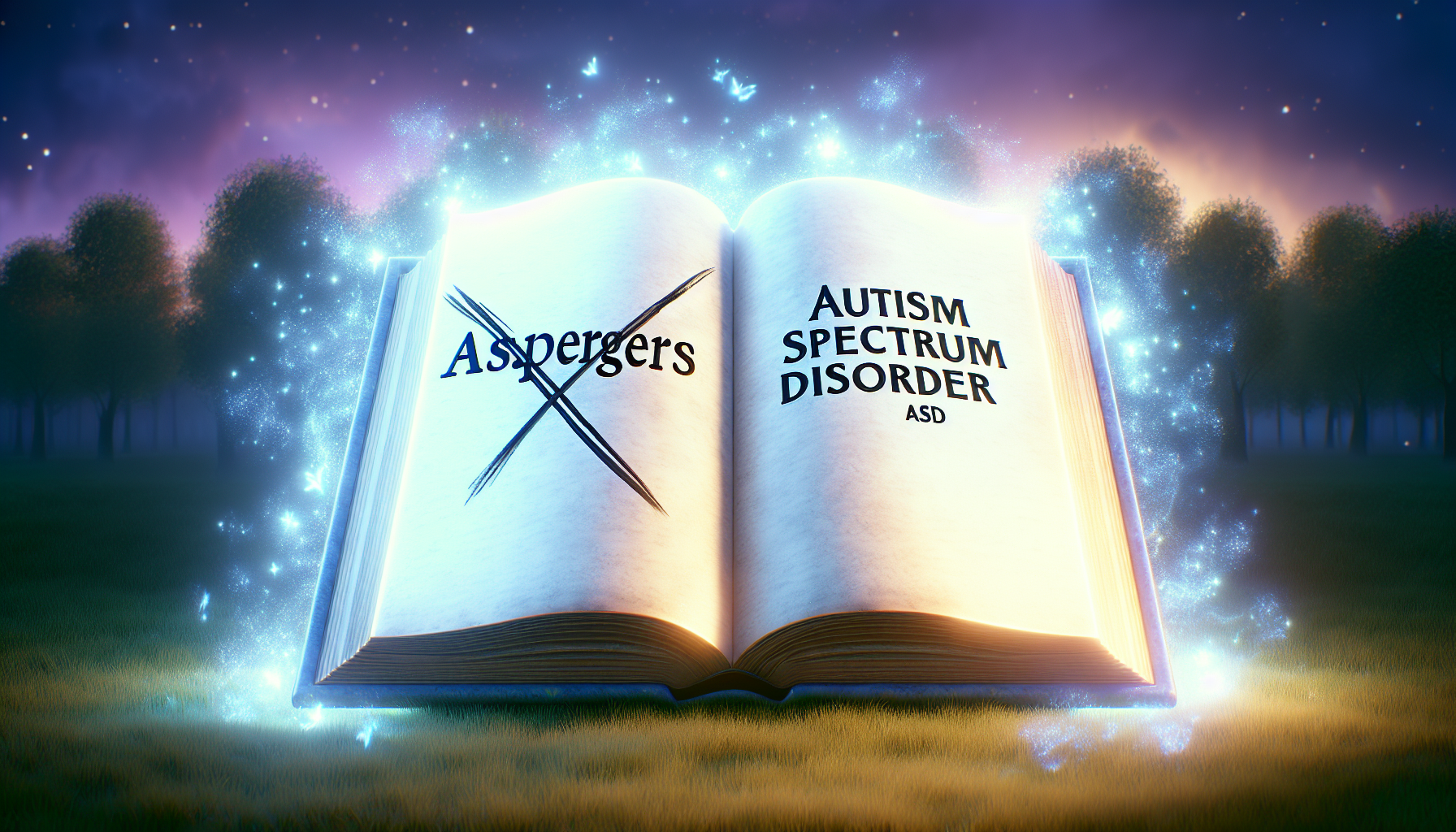
What’s the New Term for Asperger’s Syndrome?
Quick answer: In many clinical settings today, Asperger’s syndrome is no longer used as a separate diagnosis. It has largely been folded into the broader diagnosis of Autism Spectrum Disorder (ASD). Some clinicians may describe a person as having ASD (often “Level 1” support needs) instead of Asperger’s.
Why the term changed
Historically, “Asperger’s syndrome” was used to describe autistic people who did not have early language delay and who often had average or above-average cognitive abilities. Over time, clinicians and researchers recognized a few key problems:
- Inconsistent diagnosis: Two clinicians could evaluate the same person and use different labels (Asperger’s vs. autism vs. PDD-NOS).
- Blurry boundaries: The differences between categories were not as clear-cut as they seemed.
- Better fit as a spectrum: Autism traits and support needs can vary widely—and can change over time and across environments.
So the shift was toward a single “spectrum” diagnosis with clearer criteria and a way to describe support needs.
The “new term”: Autism Spectrum Disorder (ASD)
Today, many people who would previously have been labeled with Asperger’s are diagnosed with Autism Spectrum Disorder (ASD). You may also hear wording like:
- Autistic (identity-first language preferred by many autistic adults)
- Person with autism (person-first language preferred by some families and clinicians)
- ASD, Level 1 (a description of support needs in certain diagnostic frameworks)
What does “ASD Level 1” mean?
“Levels” are meant to describe how much support someone needs, not how “autistic” they are. A common way it’s explained:
- Level 1: Requiring support
- Level 2: Requiring substantial support
- Level 3: Requiring very substantial support
Important: Support needs can vary by context. Someone might need less support in one environment (for example, at home) and more in another (for example, school or work). Levels also don’t capture everything—especially strengths, coping skills, anxiety, or sensory needs.
Why you may still hear “Asperger’s”
Even though the label has shifted clinically, “Asperger’s” still shows up because:
- Some people were diagnosed years ago and prefer to keep the term for identity or clarity.
- Some countries, systems, or providers still use older frameworks or terminology.
- It can feel like a familiar shorthand for certain traits (even if it’s not technically a current standalone diagnosis in many settings).
How to talk about it in a clear, respectful way
- If you’re speaking clinically (school, insurance, medical): Use “Autism Spectrum Disorder (ASD)” and whatever support descriptors your provider uses.
- If you’re speaking personally: Use the term the individual prefers (autistic, on the spectrum, Asperger’s, etc.).
- If you’re unsure: A simple “What language do you prefer?” goes a long way.
FAQ
Is Asperger’s the same as autism?
It’s best understood as part of the autism spectrum. People formerly diagnosed with Asperger’s typically have autism traits and support needs that fit within ASD, often without early language delay.
Does this change someone’s services or support?
Sometimes it can, depending on how a school district, insurer, or provider system defines eligibility. In many cases, support is based more on functional needs (communication, daily living, behavior support, learning) than on the specific historical label.
What if my child was diagnosed with Asperger’s years ago?
That diagnosis is still a meaningful part of your child’s history. If you need updated paperwork for services, a clinician may document ASD and describe support needs and strengths.
Key takeaway
The most common “new term” for Asperger’s is Autism Spectrum Disorder (ASD). If you see “ASD Level 1,” it’s usually a way of describing support needs—often overlapping with what many people historically meant by Asperger’s.