

6 Evidence-Based Tips for Teaching Children With Autism
February 11, 2026
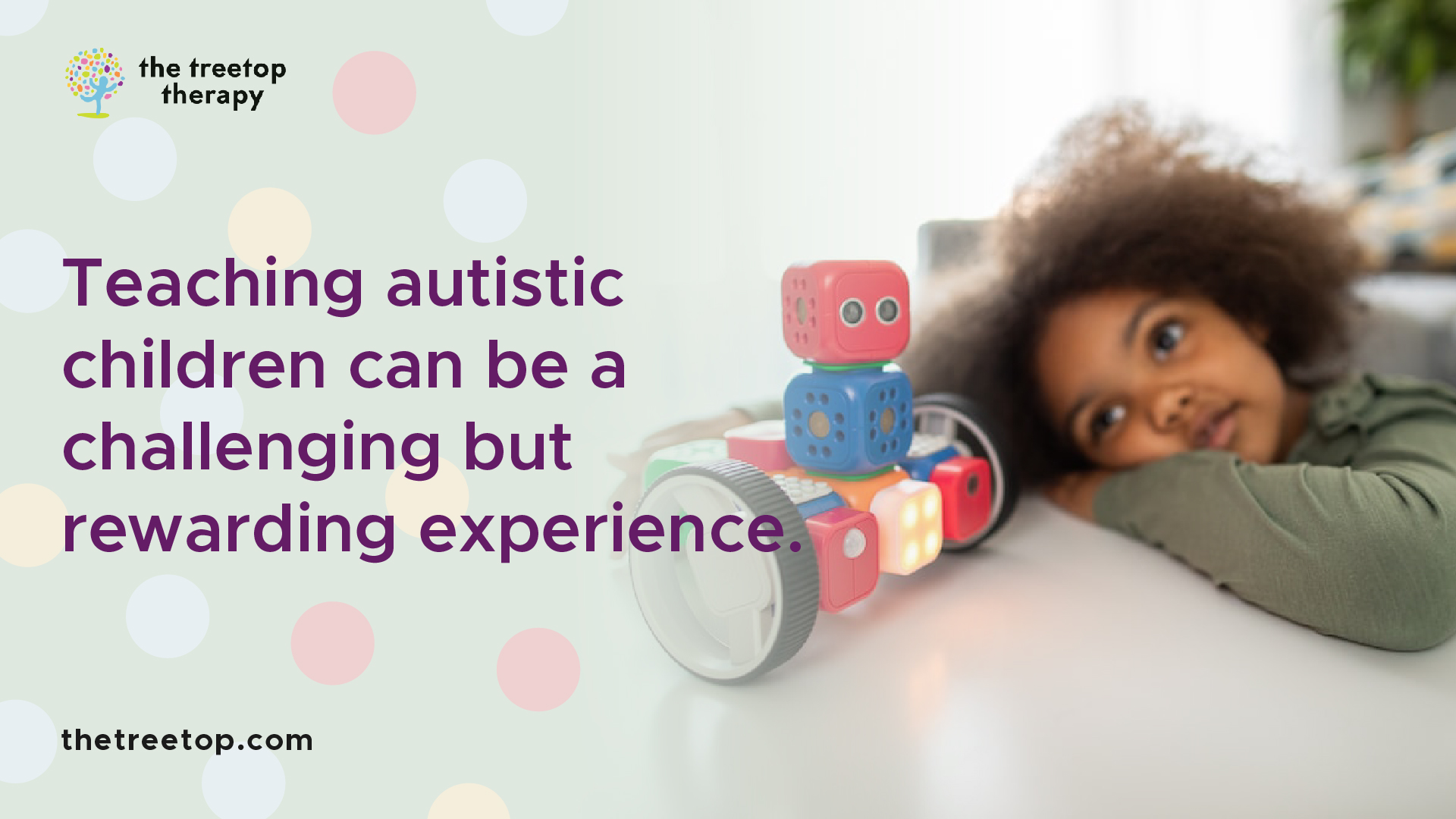
A child looks at a toy robot. Text: Teaching autistic children can be challenging but rewarding.

Teaching a child with autism doesn't require a special education degree or years of clinical training. What it does require is understanding how your child learns best — and then matching your approach to the way their brain actually processes information.

That's not a feel-good platitude. It's the core finding behind decades of autism intervention research. The National Clearinghouse on Autism Evidence and Practice (NCAEP) at the University of North Carolina's Frank Porter Graham Child Development Institute has identified 28 evidence-based practices for teaching children and young adults with autism. These aren't experimental ideas. They're strategies backed by hundreds of peer-reviewed studies spanning 1990 to 2017, synthesized in a systematic review published in the Journal of Autism and Developmental Disorders (Hume et al., 2021).

The strategies below draw directly from that evidence base. Whether you're a parent teaching at home, a caregiver reinforcing skills during daily routines, or an educator looking for actionable starting points, these six tips reflect what researchers have consistently found to work.

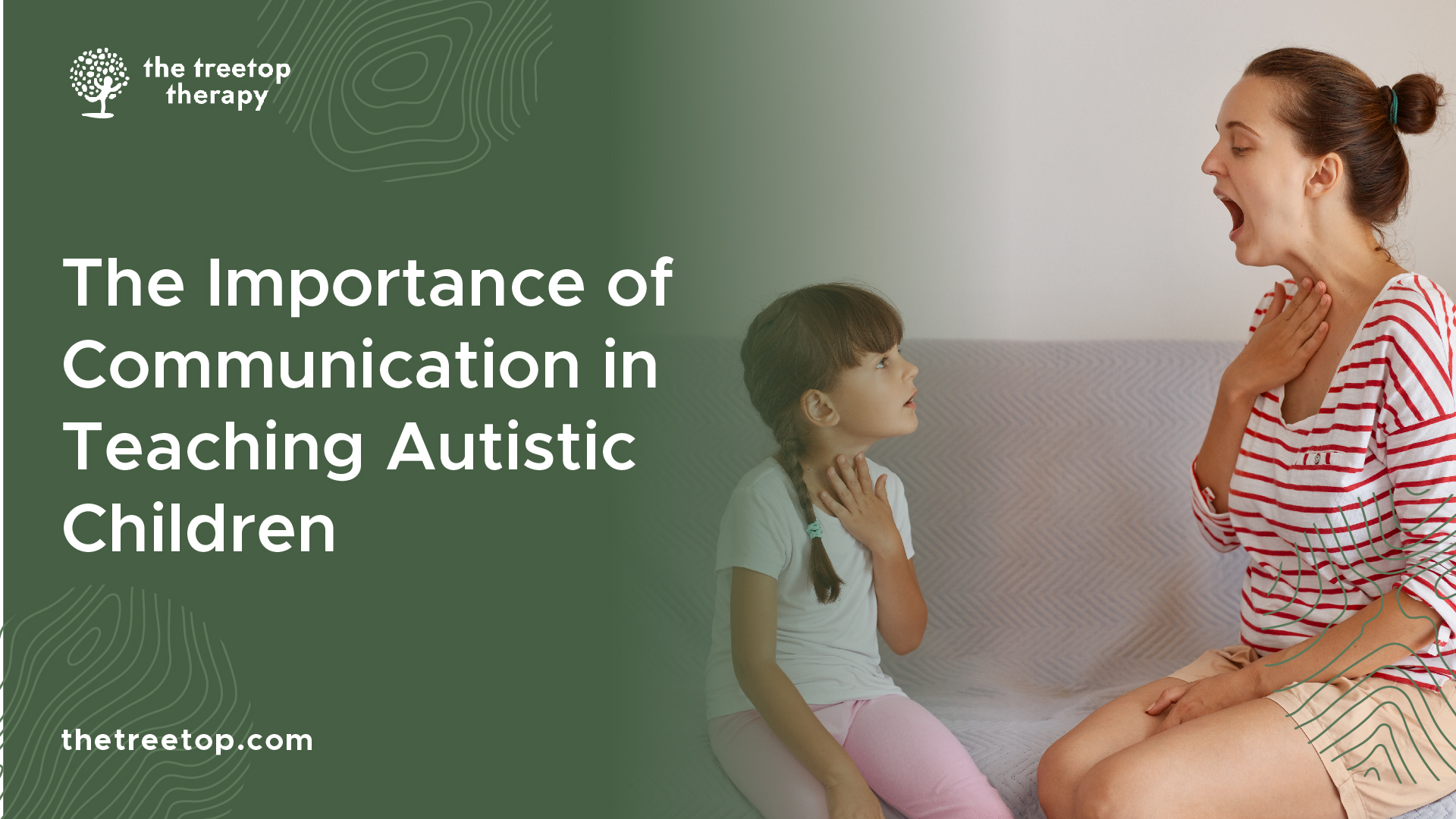
A woman and girl communicating; woman with open mouth, hand on throat. Text:

1. Use Visual Supports — Not Just Spoken Instructions

Many autistic children process visual information more reliably than auditory information. When you say "go get your shoes, put them on, and meet me at the door," that's three steps delivered in a stream of sound that disappears the moment you finish speaking. A visual schedule — even a simple one drawn on a whiteboard or printed with photos — gives your child something concrete to reference as many times as they need.

Visual supports are one of the 28 evidence-based practices identified by the NCAEP, and they show up across virtually every teaching domain: communication, social skills, daily living, and academics. Research published in the International Journal of Developmental Disabilities found that visual schedules, when combined with prompting and reinforcement, consistently increased on-task behavior in autistic students. Six of the ten studies reviewed met strong methodological criteria, providing robust evidence for the practice.

Visual supports don't have to be complicated. They can include picture schedules posted on the refrigerator showing the morning routine, first-then boards (a picture of the task to complete on the left, a picture of the preferred activity on the right), choice boards that let your child point to what they want instead of having to verbalize it, and visual timers that show how much time remains in an activity. The TEACCH (Treatment and Education of Autistic and Communication Handicapped Children) approach , developed at the University of North Carolina by Dr. Eric Schopler, has been building on this principle since the 1960s. The program's structured teaching model emphasizes visual clarity, physical organization, and predictable routines — and it's now used in classrooms worldwide.

The key insight is that visual supports work not because autistic children can't understand language, but because visual information stays available. Your child can glance at the schedule again and again without needing to remember what you said two minutes ago. That reduces anxiety, increases independence, and removes the need for you to repeat instructions.

2. Break Tasks Into Smaller Steps

If your child struggles with getting dressed, it's probably not because they can't do it. It's more likely that "getting dressed" is actually a chain of 10 to 15 separate actions — opening the drawer, choosing a shirt, pulling it over their head, adjusting it, then repeating similar steps for pants, socks, and shoes — and the whole sequence feels overwhelming when presented as a single expectation.

This is where task analysis comes in. Task analysis is the process of breaking a complex skill into small, clearly defined steps that can be taught and practiced individually. The National Professional Development Center on Autism Spectrum Disorder classifies task analysis as an evidence-based practice supported by multiple research studies. It has been shown to be effective across communication, social, academic, and daily living skills for children in elementary through middle school.

A well-written task analysis turns an overwhelming expectation into a manageable series of actions. Instead of "brush your teeth," the steps might be: pick up the toothbrush, turn on the water, wet the brush, pick up the toothpaste, squeeze toothpaste onto the bristles, brush the top teeth, brush the bottom teeth, spit, rinse the brush, turn off the water, and put the toothbrush back. Each step should describe one observable action. If you can't tell whether your child did the step correctly by watching, the step needs to be broken down further.

There are two common ways to teach through a task analysis. Forward chaining starts with the first step and adds steps sequentially as each is mastered. Backward chaining starts with the last step — which means your child experiences the satisfaction of "finishing" the task from the very first practice session. Both approaches are effective. The right choice depends on your child's strengths and what keeps them motivated.

As the VCU Autism Center for Education emphasizes, a task analysis is a tool for the person teaching — not a checklist for the child. It ensures that the skill is taught the same way every time, by every person who works with your child. That consistency matters enormously for autistic learners, who often struggle when different adults have different expectations for the same task.

3. Build on Your Child's Special Interests

Many autistic children develop deep, focused interests in specific topics — dinosaurs, trains, weather patterns, a particular video game or character. These interests are sometimes dismissed as obsessions or seen as something to redirect away from. But research increasingly shows that they're one of the most powerful teaching tools available.

The concept is straightforward: if your child is passionate about space, use space themes to teach counting (how many planets?), reading (a book about astronauts), social turn-taking (a space trivia game), or even daily living skills (an astronaut's "pre-launch checklist" for getting ready in the morning). This isn't just creative parenting. It's an application of a core principle in Naturalistic Developmental Behavioral Interventions (NDBIs) , a category of evidence-based approaches that includes Pivotal Response Training and the Early Start Denver Model.

NDBIs share several key features: they happen in natural settings within everyday routines, they use activities that are child-preferred and motivating, and they rely on behavioral principles like reinforcement. A systematic review of 54 studies on family-mediated interventions found that these teaching strategies were generally effective in improving children's social engagement, communication skills, and reciprocal social interactions. Some studies also reported improvements in parent stress and parenting confidence.

The Incredible Years Teacher Autism Program calls this "getting into the child's spotlight" — joining your child's preferred activities, even when they seem unconventional or repetitive, because that's where your child's attention and motivation already are. When you meet your child where their interest lives, social interaction becomes more rewarding and learning opportunities multiply naturally.

Special interests also serve important emotional functions. They provide predictability in a world that can feel chaotic, offer a coping mechanism during stress, and give autistic children a domain where they feel genuinely competent. Using these interests as teaching vehicles respects what matters to your child while channeling their natural motivation toward new skills.

4. Use Positive Reinforcement Strategically

Positive reinforcement — providing something motivating immediately after a desired behavior — is probably the single most well-documented strategy in autism education. It's one of the foundational principles of Applied Behavior Analysis and appears across virtually all 28 evidence-based practices identified by the NCAEP.

A 2023 meta-analysis published in BMC Psychiatry examined comprehensive ABA-based interventions for children with autism and found medium effect sizes for intellectual functioning (SMD = 0.51) and adaptive behavior (SMD = 0.37) compared to treatment-as-usual or minimal treatment groups. A separate 2022 meta-analysis of parent-implemented interventions found moderately strong overall benefits (effect size g = 0.553) across 51 effect sizes, with gains in social skills, language, and reduction of challenging behaviors.

But "positive reinforcement" doesn't just mean handing out candy. Effective reinforcement is individualized (what motivates one child may not motivate another), immediate (delivered right after the desired behavior, not hours later), specific (tied to a clear behavior, not vague praise like "good job"), and faded over time so the child doesn't become dependent on it.

For many autistic children, the most effective reinforcers are access to preferred activities or items — time with a favorite toy, a few minutes of a preferred video, or the opportunity to talk about their special interest. Social reinforcement (praise, high-fives, enthusiastic reactions) works well for some children and less well for others. The key is to observe what your child actually seeks out and gravitates toward, then use that as leverage for teaching.

First-then boards are a practical way to build reinforcement into your day. The "first" side shows the task or expectation (first put on shoes), and the "then" side shows the reward (then we go to the park). This approach makes the contingency visible and concrete rather than relying on verbal promises your child may not fully process or trust.

Parents with child, laptop on table, text:

5. Create a Structured, Predictable Environment

Autistic children often struggle with transitions, unexpected changes, and environments that feel chaotic or unpredictable. This isn't a personality quirk — it's related to differences in executive functioning and sensory processing that make it genuinely harder to shift attention, regulate emotions, and organize behavior when the environment keeps changing.

Structured teaching addresses this directly. The TEACCH model has demonstrated through over a dozen research studies and large-scale trials that organized, visually clear environments help autistic children understand expectations, reduce anxiety, and function more independently. The model's effectiveness is backed by a body of research spanning several decades.

In practical terms, structuring your child's environment means establishing consistent daily routines so your child knows what comes next, designating specific physical spaces for specific activities (a homework spot, a play area, a calm-down corner), minimizing sensory distractions — fluorescent lighting, background noise, visual clutter — where your child needs to focus, and using visual or auditory signals to mark transitions (a timer, a song, a specific phrase).

Consistency across settings matters too. When the same expectations, routines, and visual supports are used at home, at school, and in therapy, the child doesn't have to figure out a new set of rules every time they move between environments. Research on parent-implemented interventions consistently shows that when parents and teachers implement the same strategies, the probability that those strategies will be effective across settings increases significantly.

Structure doesn't mean rigidity. The goal is to provide enough predictability that your child can focus their mental energy on learning rather than spending it trying to figure out what's happening next. As your child masters routines, you can gradually introduce small variations to build flexibility — but the baseline of predictability should come first.

6. Teach Social Skills Explicitly — Don't Assume They'll Pick Them Up

Neurotypical children absorb enormous amounts of social information through observation — how close to stand when talking to someone, how to read facial expressions, when to take turns in conversation, how to join a group already playing together. Many autistic children don't pick up these cues implicitly. They need social skills taught the same way you'd teach math: with clear instruction, practice, and feedback.

Several evidence-based approaches exist for explicit social skills instruction. Social narratives (including Social Stories, developed by Carol Gray) describe social situations and expected responses in simple, structured language. Video modeling shows the child a video of someone performing the desired social behavior, which they can watch repeatedly. Peer-mediated interventions train neurotypical peers to initiate interactions and model social behavior for autistic classmates. A systematic review of peer-mediated interventions found them to be highly effective for improving social skills in children with autism, with two meta-analyses confirming strong effects.

At home, explicit social skills teaching can look like role-playing greetings before a family gathering, narrating social situations in real time ("See how your brother is frowning? That usually means he's frustrated"), using your child's preferred activities as a context for practicing turn-taking and conversation, and creating simple scripts for common social situations (ordering food at a restaurant, asking a peer to play).

The Snack Talk intervention, studied in preschool settings, demonstrates how even structured visual supports during routine activities like mealtimes can increase conversation engagement among autistic children. The researchers found that when visual communication supports were used during snack time, all five participating children showed increased conversation engagement that was maintained after the intervention ended.

The bottom line is that social skills are skills — and like all skills, they can be taught, practiced, and learned. The mistake is assuming that social understanding will develop naturally through exposure alone.

What Connects All of These Strategies

If you look across these six tips, a consistent theme emerges: teaching children with autism effectively means making the implicit explicit. Autistic children don't necessarily learn less — they learn differently. Visual supports make invisible expectations visible. Task analysis makes hidden sequences of behavior obvious. Special interests provide motivation that doesn't need to be manufactured. Reinforcement clarifies the connection between behavior and outcome. Structure removes the cognitive burden of constant uncertainty. And explicit social instruction teaches what other children absorb through osmosis.

The NCAEP's third-generation review analyzed 972 peer-reviewed studies and identified 28 practices that meet the threshold for evidence-based classification. The strategies in this article draw from that evidence base, but they're also, fundamentally, practices that respect how autistic children actually process information — and work with that processing style rather than against it.

If you're a parent implementing these strategies at home, the research is in your favor. A meta-analysis of parent-implemented interventions found positive effects across social skills, communication, and adaptive behavior regardless of the specific intervention model used. Parents don't need to be therapists. They need clear strategies, consistent implementation, and the understanding that their child's differences in learning are real — not a reflection of effort or ability.

If you'd like help developing and implementing these strategies as part of a structured ABA therapy program, our team at Treetop ABA can work with you and your child to build skills in the areas that matter most to your family.

Related articles

By Treetop ABA Therapy March 12, 2026
Treetop ABA Therapy Privacy Policy. Learn how we collect, use, and protect your personal and health information across our ABA therapy locations.
Discovery ABA and Little Leaf ABA are now Treetop ABA Therapy.
By The Treetop ABA Therapy February 17, 2026
Discovery ABA and Little Leaf ABA are now Treetop ABA Therapy. Same team, same locations, same care. Here is what changed, what stayed the same, and why.
Woman in white coat helping a child color a worksheet with markers.
By The Treetop February 13, 2026
Learn 8 evidence-based strategies for teaching autistic children, from visual supports to structured environments. Practical tips parents and educators can use today.