

Your Child Was Just Diagnosed — Now What Do the "Levels" Mean?
If your child was recently diagnosed with autism spectrum disorder (ASD), you've probably heard terms like "Level 1," "Level 2," or "Level 3" — and you may be wondering what they actually mean for your child's future. These levels aren't about intelligence, potential, or worth. They describe how much support your child currently needs in two areas: social communication and restricted or repetitive behaviors.
Here's the short version: Level 1 means "requiring support," Level 2 means "requiring substantial support," and Level 3 means "requiring very substantial support." These designations come from the DSM-5, the diagnostic manual used by clinicians across the United States. And importantly, they can change over time — a child assessed at Level 2 today may need less support after years of effective therapy.
Key Takeaways
The DSM-5 defines three autism levels based on support needs, not intelligence or ability. Level 1 involves noticeable social challenges that respond well to structured support. Level 2 involves marked communication difficulties that persist even with help. Level 3 involves severe deficits requiring very substantial, often round-the-clock support. These levels are not permanent — children can progress with early intervention and individualized therapy such as ABA. Every child with autism has a unique profile of strengths and challenges regardless of their assigned level.
Misconception: "Levels" Mean "Functioning Labels"
One of the most common misunderstandings parents encounter is equating autism levels with the old "high-functioning" and "low-functioning" labels. These terms are outdated for good reason. A child described as "high-functioning" may still experience debilitating sensory overload or intense anxiety. A child labeled "low-functioning" may have remarkable problem-solving abilities that go unrecognized.
The DSM-5 level system was designed to move away from these misleading labels. Instead of judging a child's overall ability, it focuses specifically on how much external support is needed in daily life. The American Psychiatric Association introduced these classifications in 2013 precisely because the old categories — Asperger's syndrome, PDD-NOS, autistic disorder — created confusion and uneven access to services.
Misconception: Your Child's Level Is Fixed for Life
Autism levels describe your child's support needs at a specific point in time. They are not a ceiling on what your child can achieve. With evidence-based interventions like applied behavior analysis (ABA), speech therapy, and occupational therapy, many children develop skills that reduce the intensity of support they need over time. A child assessed at Level 2 during early childhood may demonstrate Level 1 characteristics by school age if they receive consistent, individualized therapy.
Misconception: Level 3 Means Your Child Can't Learn
Level 3 autism means a child needs very substantial support — it does not mean they are unable to learn or grow. Many children with Level 3 autism develop meaningful communication skills through alternative methods like picture exchange systems (PECS) or augmentative and alternative communication (AAC) devices. Every child with autism can make progress when given the right tools and support.
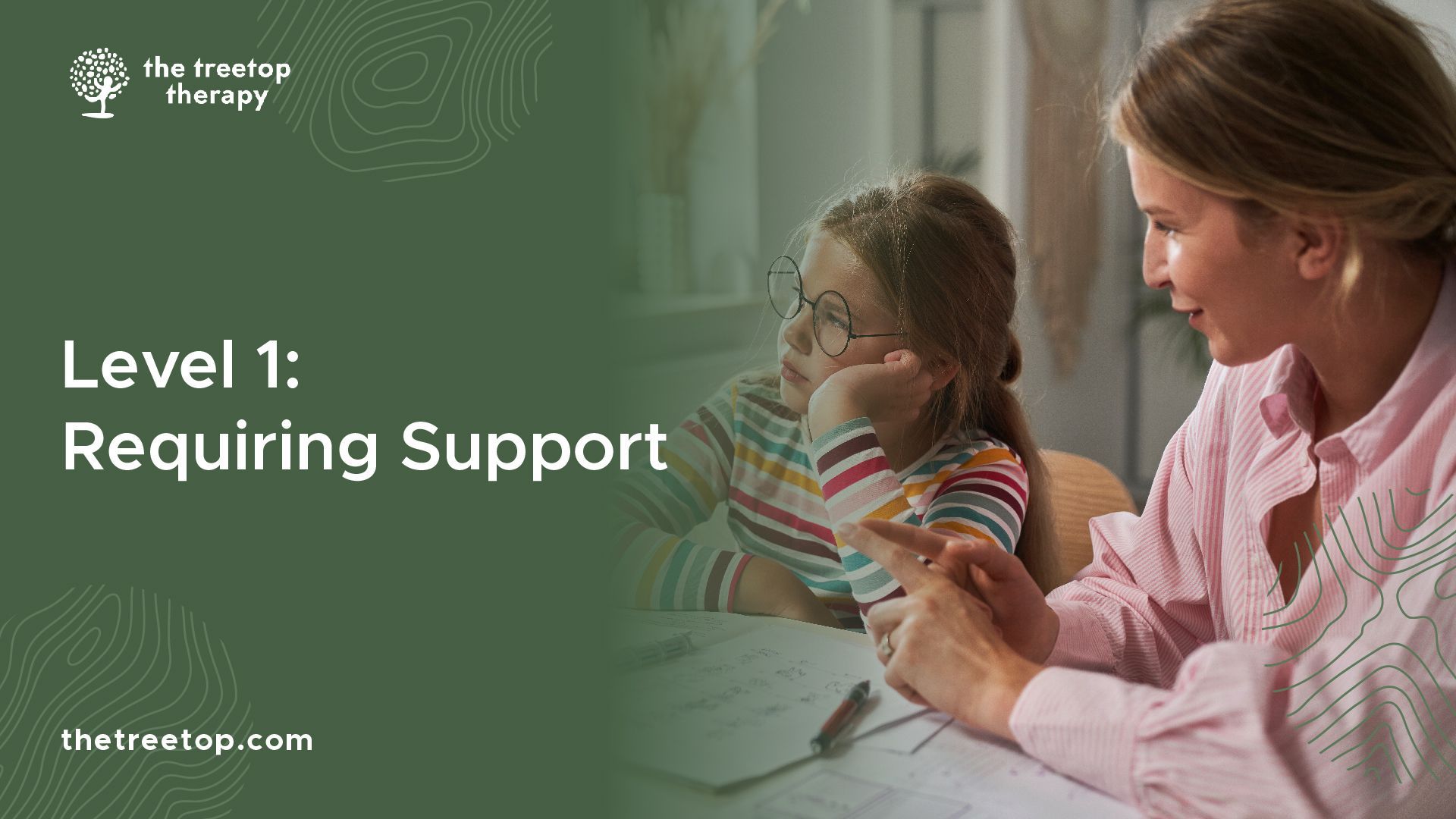
Level 1 Autism: Requiring Support
Level 1 is sometimes described as the "mildest" level, but that label can be misleading. Children with Level 1 autism face real challenges — they just tend to be less visible. According to the DSM-5, Level 1 is characterized by difficulty initiating social interactions, atypical or unsuccessful responses to social overtures from others, and what may appear as a decreased interest in social engagement.
Your child may be able to speak in full sentences and manage many daily tasks independently, but they might struggle to read social cues, maintain back-and-forth conversation, or adjust when plans change unexpectedly. Restricted and repetitive behaviors may interfere with functioning — for example, an intense focus on a specific topic that makes it hard to transition between activities at school.
What Support Looks Like for Level 1
Children with Level 1 autism often benefit from social skills training, structured routines, and environmental accommodations. ABA therapy can help by breaking down complex social situations into learnable steps and reinforcing flexible thinking. Speech therapy may address pragmatic language skills — the unwritten rules of conversation that many children with Level 1 autism find confusing. Occupational therapy can help with sensory sensitivities that may not be immediately obvious but still affect daily comfort and performance.
What Parents Often Notice
Parents of children with Level 1 autism frequently describe a child who is bright and capable but seems to struggle "for no apparent reason" in social settings. You might notice that your child has difficulty making or keeping friends, becomes very upset by small changes in routine, or has an unusually intense interest in a particular subject. These challenges are real and deserve support, even if they aren't always visible to teachers or extended family.
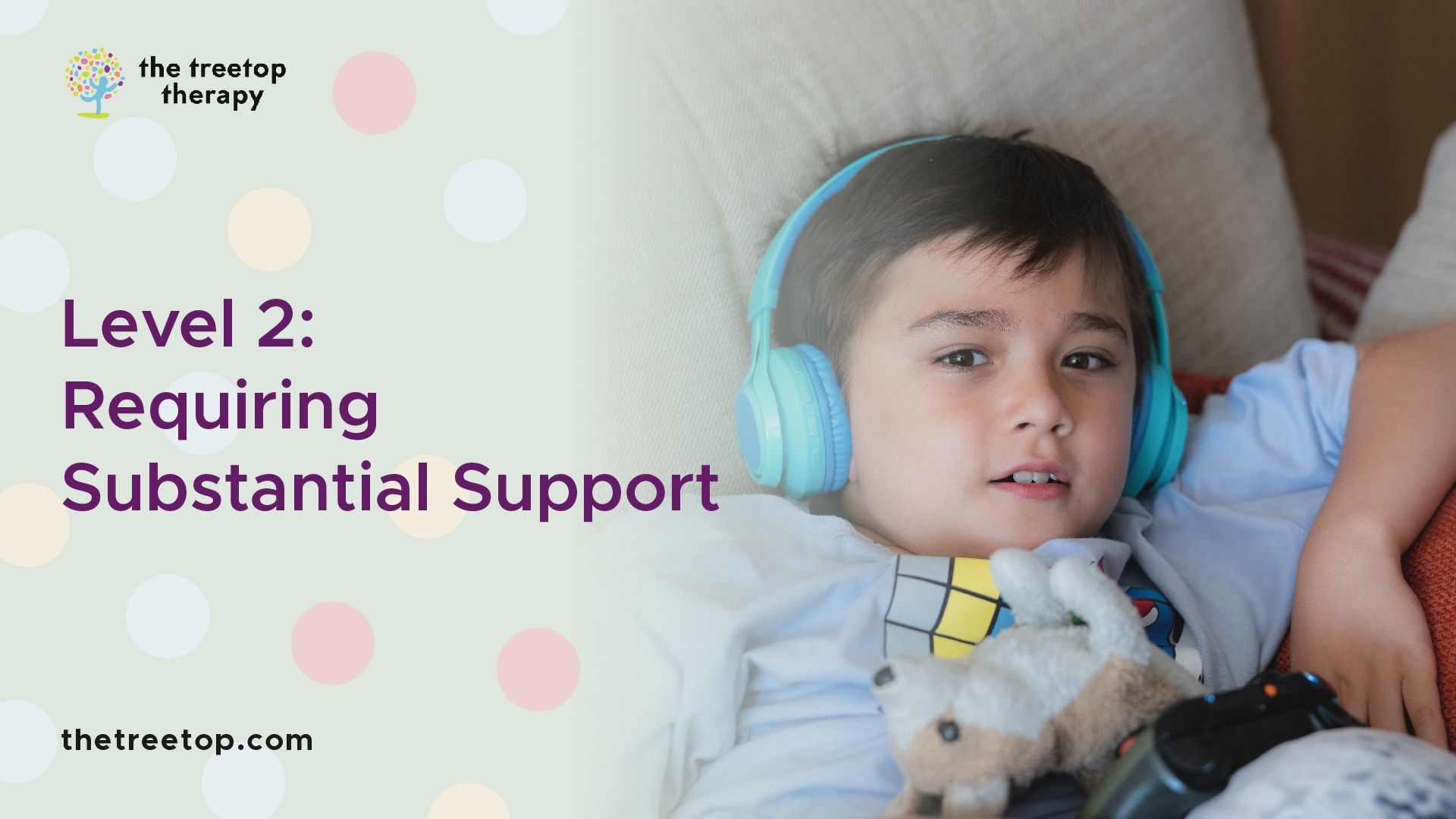
Level 2 Autism: Requiring Substantial Support
Children with Level 2 autism show marked deficits in verbal and nonverbal communication even when support is in place. According to the DSM-5, individuals at this level have limited ability to initiate social interactions and may respond in ways that seem unusual or abbreviated compared to typically developing peers.
Your child may use short phrases rather than full sentences, have difficulty understanding or using nonverbal cues like facial expressions or gestures, and may show strong distress when asked to shift attention or change activities. Restricted and repetitive behaviors are noticeable to casual observers and interfere with functioning across multiple settings — not just at home but also at school, in the community, and during outings.
What Support Looks Like for Level 2
Level 2 typically requires more intensive and structured support than Level 1. ABA therapy at this level often involves more hours per week and focuses on both communication development and reducing behaviors that interfere with learning. Speech-language therapy may emphasize building functional communication — helping your child express needs, make choices, and engage in basic social exchanges. Occupational therapy can address motor skills, daily living activities like dressing and grooming, and sensory processing challenges that affect your child's ability to participate in everyday situations.
Visual supports such as picture schedules, social stories, and visual timers are frequently used to help children with Level 2 autism understand routines and anticipate transitions. These tools reduce uncertainty, which is often a significant source of anxiety and challenging behavior.
What Parents Often Notice
Parents of children with Level 2 autism often describe a child who has noticeably delayed speech, strong reactions to changes in environment or routine, and difficulty engaging with peers. You may find that your child communicates needs through behaviors rather than words, or that they become overwhelmed in environments with a lot of sensory input like grocery stores or birthday parties.
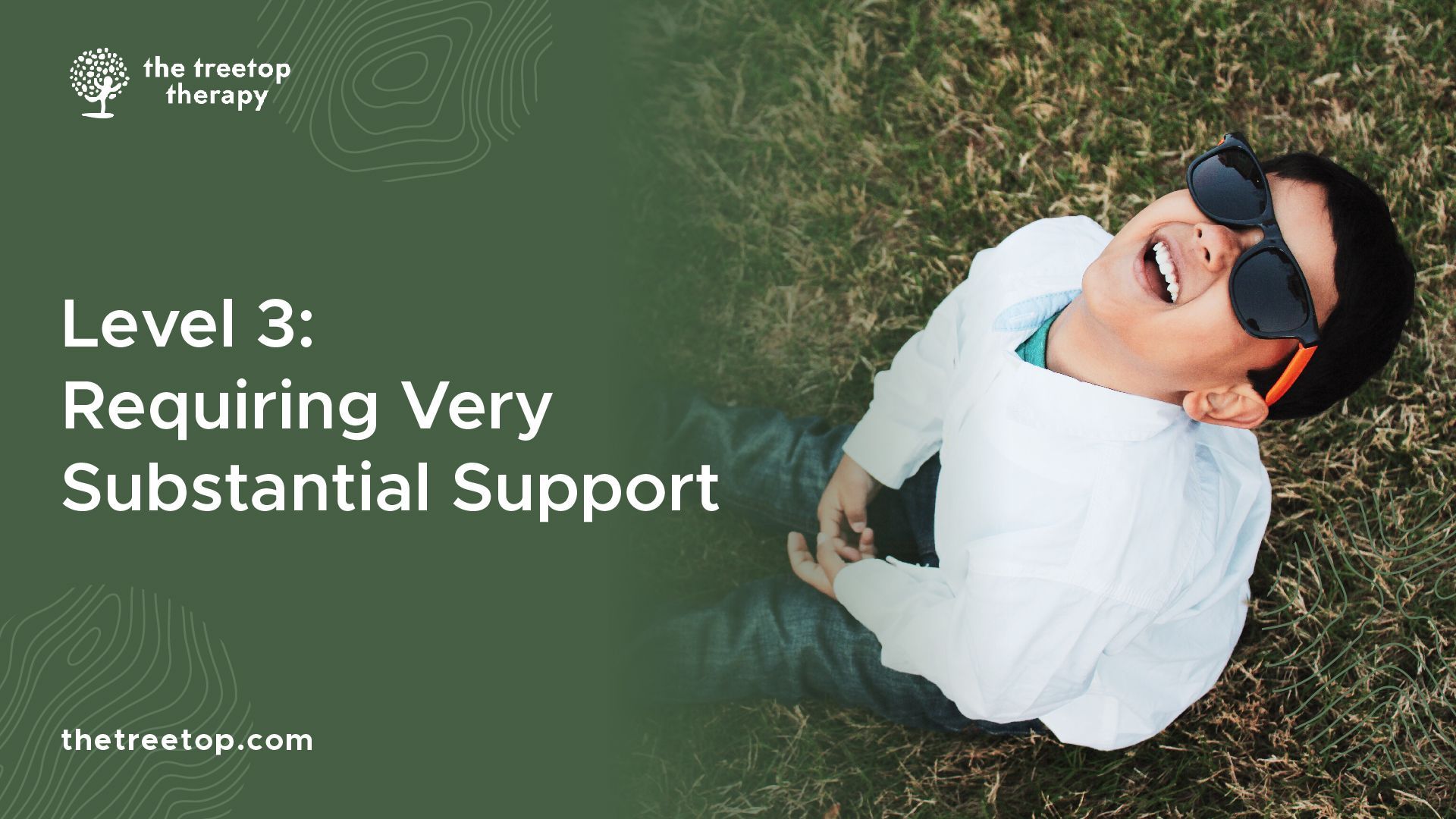
Level 3 Autism: Requiring Very Substantial Support
Level 3 is the most intensive level on the autism spectrum. The DSM-5 describes it as involving severe deficits in verbal and nonverbal social communication that cause severe impairments in functioning, very limited initiation of social interactions, and minimal response to social overtures from others.
A child with Level 3 autism may have very limited speech or may not use spoken language at all. They may communicate through gestures, leading a caregiver by the hand, or using assistive technology. Restricted and repetitive behaviors — such as hand flapping, rocking, or intense preoccupation with specific objects — significantly interfere with daily functioning and make coping with change extremely difficult.
What Support Looks Like for Level 3
Children with Level 3 autism typically require intensive, often daily intervention across multiple areas. ABA therapy is a cornerstone of treatment and focuses on building foundational skills: communication, self-care, safety awareness, and reduction of self-injurious or aggressive behaviors. Speech therapy often involves introducing alternative communication systems like PECS or AAC devices so that your child has a reliable way to express needs and preferences.
Occupational therapy at this level targets basic daily living skills — eating, dressing, toileting, and hygiene — and addresses significant sensory processing differences. Many children with Level 3 autism also benefit from structured educational programs specifically designed to meet their needs, with low student-to-teacher ratios and built-in therapeutic support.
Families may also benefit from respite care services, in-home support, and coordination with a team of professionals including a Board Certified Behavior Analyst (BCBA), speech-language pathologist, occupational therapist, and pediatrician.
What Parents Often Notice
Parents of children with Level 3 autism often describe feeling overwhelmed by the intensity of their child's needs. Daily routines like mealtimes, bath time, and bedtime can require significant planning and patience. You may notice that your child has difficulty tolerating everyday sensory experiences — certain textures, sounds, or lights may cause extreme distress. It is completely normal to feel uncertain about the future, and seeking support from experienced professionals and other families is a sign of strength, not weakness.
What All Three Levels Have in Common
Despite the differences in support needs, the three autism levels share important characteristics. All children on the spectrum may experience sensory processing differences — either being overly sensitive to stimuli like sound, light, or touch, or being under-responsive and seeking additional sensory input. Executive functioning challenges — difficulty with planning, organizing, and completing multi-step tasks — are common across all levels. And transitions or changes in routine tend to be difficult for children at every level, though the intensity of their response may vary.
Perhaps most importantly, every child with autism has strengths. Some have exceptional visual memory. Others show remarkable focus and deep knowledge in areas of interest. Effective therapy builds on these strengths while providing support in areas of challenge.
How Is Autism Level Determined?
Autism levels are assigned during a comprehensive diagnostic evaluation, typically conducted by a developmental pediatrician, child psychologist, or multidisciplinary team. The evaluation includes a review of developmental history, direct observation of behavior, and standardized assessment tools such as the Autism Diagnostic Observation Schedule (ADOS-2).
The clinician assesses your child's functioning in two core domains — social communication and restricted/repetitive behaviors — and assigns a level for each domain independently. This means a child could technically be Level 1 for social communication but Level 2 for restricted behaviors, or any other combination.
It's worth noting that the level assigned at diagnosis is based on your child's presentation at that specific time. As your child grows and receives support, their needs may shift, and a re-evaluation can reflect that progress.
Questions to Ask When Evaluating an ABA Provider
If your child has been diagnosed at any level, you'll likely be exploring ABA therapy as a treatment option. Not all ABA providers operate the same way. Here are questions that can help you evaluate quality:
Does the provider conduct an individualized Functional Behavior Assessment (FBA) before creating a treatment plan? Is therapy supervised by a Board Certified Behavior Analyst (BCBA) who is actively involved in your child's care — not just signing off on plans written by others? Does the provider incorporate play-based, naturalistic teaching methods alongside structured programs? How does the provider measure and share progress with families? What is the ratio of direct therapists (RBTs) to supervising BCBAs? Does the provider involve parents and caregivers in the therapy process through training and collaboration?
Frequently Asked Questions
Can my child move from one autism level to another?
Yes. Autism levels reflect current support needs, not a permanent category. With consistent, evidence-based therapy, many children develop skills that reduce the intensity of support they need. A child diagnosed at Level 2 may later present with Level 1 characteristics. Progress varies by individual, and some children may require lifelong support in certain areas.
Is Level 3 autism the same as intellectual disability?
No. Level 3 describes the amount of support needed for social communication and daily functioning — it is not a measure of intelligence. Some children with Level 3 autism have co-occurring intellectual disability, but many do not. Cognitive ability and autism level are separate considerations.
How common is autism?
According to the most recent CDC data published in 2025, approximately 1 in 31 children (3.2%) aged 8 years has been identified with autism spectrum disorder. ASD is over three times more common in boys than in girls and is identified across all racial, ethnic, and socioeconomic groups.
What should I do if I suspect my child has autism?
Talk to your child's pediatrician about your concerns as soon as possible. Early identification and intervention lead to better outcomes. Your pediatrician can refer you for a comprehensive evaluation, or you can contact your state's early intervention program directly for children under age 3.
Why did the DSM-5 eliminate Asperger's syndrome as a separate diagnosis?
The DSM-5, published in 2013, combined Asperger's syndrome, PDD-NOS, autistic disorder, and childhood disintegrative disorder into a single diagnosis of autism spectrum disorder. This change reflected the scientific understanding that these were not distinct conditions but rather different presentations along a single spectrum. The level system was introduced to capture differences in support needs more accurately.
Does my child's autism level affect which therapies they can access?
In practice, the assigned level can influence insurance authorization for services, particularly the number of ABA therapy hours approved. Higher levels often qualify for more intensive services. However, children at all levels can benefit from ABA, speech therapy, and occupational therapy. If you believe your child needs more support than their current authorization allows, your BCBA and pediatrician can help advocate for appropriate services.
Take the Next Step for Your Child
At The Treetop ABA, we provide individualized, BCBA-led therapy for children across all levels of the autism spectrum. Every child who enters our program begins with a thorough Functional Behavior Assessment so we can understand their unique strengths, challenges, and goals. Our play-based, family-centered approach means parents are always part of the process — because the people who know your child best should be at the center of their care.
If you're exploring ABA therapy for your child in Mesa, Arizona, we'd love to talk with you. Schedule a free consultation to learn how personalized support can help your child grow.
Sources
- Autism Speaks — ASD Levels of Severity
- Children's Hospital of Philadelphia — Diagnostic Criteria for ASD in the DSM-5
- Centers for Disease Control and Prevention — Data and Statistics on ASD
- Weitlauf et al. — DSM-5 "Levels of Support:" A Comment on Discrepant Conceptualizations of Severity in ASD (Journal of Autism and Developmental Disorders, 2014)
- Medical News Today — Levels of Autism: Symptoms and Criteria
- Lee et al. — Approach to Autism Spectrum Disorder: Using the New DSM-V Diagnostic Criteria (Canadian Family Physician, 2015)
Related articles